
Trade associations live and die by trust. Members pay dues, sponsors write checks, and chapters volunteer their name and reputation, all because they believe in what your organization stands for. But that trust erodes fast when your brand looks different everywhere it shows up.
A state chapter using last year’s logo. A sponsor deck with the wrong color palette. A regional affiliate describing your mission in totally different language than national uses. A staff member building a slide template from scratch because no one can find the “real” one. None of these mistakes are dramatic on their own. Together, they tell members and partners that the organization behind the brand isn’t quite as buttoned-up as it claims to be.
For most trade associations, the root cause isn’t a lack of care. It’s a lack of infrastructure. The brand guidelines exist, but they live in a PDF from three rebrands ago, buried in a shared drive nobody opens.
In 2026, that’s no longer a minor inconvenience. It’s a real liability.
Why static guidelines don’t work for membership organizations
Trade associations are structurally different from a typical company. You’re not managing one marketing team. You’re managing a network: national staff, regional chapters, committees, sponsors, vendors, and volunteer leadership, all producing content with your name on it.
A static PDF brand guide assumes a single team with easy access to the same files and the same institutional memory. That assumption breaks down almost immediately for an association. Chapter leaders change every year or two. Sponsors design their own co-branded materials. Volunteers are doing their best with whatever logo file they can find in their inbox.
The result is brand drift. Slowly, in dozens of small decisions made by people who were never properly equipped, the brand stops looking like itself.
What’s different about digital brand guidelines
A digital brand platform replaces the static document with a living, centralized hub. Instead of a PDF that goes stale the moment it’s exported, everyone with access sees the current logo files, the current color values, the current messaging, all in one place, updated in real time.
This matters even more for membership organizations than it does for a typical B2B company, because of how distributed your brand usage really is:
- Chapters and regional affiliates can self-serve approved assets instead of emailing national headquarters and waiting
- Sponsors and partners can find co-branding rules and lock-up specs without back-and-forth
- New staff and volunteer leadership get onboarded into the brand instantly, instead of inheriting a folder of mismatched files
- Marketing and comms teams spend less time policing misuse and more time on strategy
We use Standards for exactly this reason when we build out guidelines for our clients. It’s built for brands that need to be understood and used correctly by people outside a single internal team, which is precisely the challenge most trade associations face.
Guidelines aren’t just a logo file
When people hear “brand guidelines,” they tend to picture a logo, a color palette, a font. That’s part of it, but for a membership organization, it’s often the smaller part.
The bigger risk isn’t a chapter using the wrong shade of blue. It’s a regional affiliate describing your mission in language that contradicts national messaging. It’s a sponsor email that sounds nothing like your advocacy materials. It’s a new staff member who has no idea how the association is supposed to sound when it talks to a member versus a legislator versus the press.
A complete set of digital guidelines covers that ground too:
- Messaging pillars and key talking points, so every chapter and spokesperson is telling the same story
- Tone of voice, including how it shifts across audiences, from members to sponsors to policymakers
- Positioning: what the association stands for, who it serves, and what makes it different from adjacent groups
- Naming conventions for committees, initiatives, and sub-brands
- Editorial guidelines, like preferred terminology and language to avoid
Put together with the visual system, this turns your guidelines into something closer to an operating manual for how your organization presents itself, not just a style sheet. That’s especially valuable for associations, where dozens of people who don’t sit in your comms department are speaking on your behalf every day.
The hidden cost of brand inconsistency
It’s easy to write off inconsistent branding as a cosmetic issue. For a membership organization, it’s not.
Your brand is one of the clearest signals you have of organizational competence. Prospective members evaluate it before they ever read your mission statement. Sponsors weigh it when deciding whether your association is a credible platform for their investment. Legislators and media form impressions of your relevance and authority partly from how polished and current you appear.
When the brand looks fragmented, it quietly raises doubts. Is this organization well-run? Is it still relevant? Can it represent my interests effectively at the table?
None of that is fair to the substance of the work your association does. But it’s how perception works, and perception drives membership renewal, sponsorship dollars, and policy influence alike.
Where to start
The strongest argument for moving to a digital platform isn’t really about fixing what’s broken. It’s about what becomes possible once your brand infrastructure can keep up with your organization.
Associations that modernize their brand guidelines find it easier to:
- Launch new initiatives, conferences, or sub-brands without diluting the parent brand
- Bring on new chapters or affiliates with a clear, fast onboarding path
- Maintain consistency across the channels members actually use: social, email, events, advocacy materials
- Demonstrate the kind of professionalism that supports membership growth and sponsorship renewal
A brand platform turns your guidelines from a compliance document into a tool your network actually wants to use, because it makes their jobs easier, not harder.
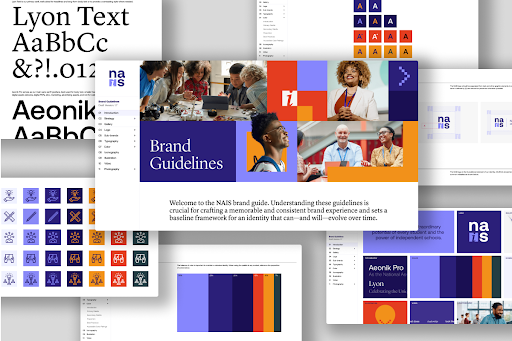
Digital guidelines support growth, not just consistency
You don’t need a full rebrand to benefit from a digital brand platform. Many associations get the most value simply by digitizing and centralizing the identity they already have: locking down assets, clarifying usage rules, and making everything easy to find for the people who need it.
That said, moving to a digital system is also a natural moment to ask harder questions. Does our visual identity still reflect who we are today? Does our messaging and positioning speak to the members we’re trying to attract, not just the ones we already have? Is our tone still right for the audiences we’re trying to reach?Sometimes the process of organizing a brand reveals that it’s time to evolve it, strategically as well as visually.
Either way, 2026 is the year to stop treating brand guidelines as a document and start treating them as infrastructure. Your chapters, sponsors, and staff are representing your organization every day, often without much oversight. Give them a system that makes it easy to get it right.
At Grafik, we help membership organizations build brand identities that hold up across a distributed network, and we implement them on platforms like Standards so the work stays consistent long after launch. If your association’s brand guidelines need a serious upgrade, let’s talk.